
Accessible hiring and workplace inclusion

Inclusive Recruitment Support

Helping employers remove barriers before talent is missed.

Inclusive recruitment is not about lowering standards. It is about making sure disabled and neurodivergent candidates have a fair opportunity to show their skills, experience and potential.

Calling All Minds helps organisations review and improve recruitment processes so they are clearer, more accessible and more inclusive. We work with employers, HR teams, hiring managers, talent teams and inclusion leads to reduce barriers across the full candidate journey, from job adverts and application forms to interviews, assessments, onboarding and reasonable adjustments.

The result is a recruitment process that works better for candidates and gives employers a stronger route to talent.

Inclusive recruitment support for accessible hiring processes

Why inclusive recruitment matters

Many barriers in recruitment are accidental.

A job advert may use vague language. An application form may be difficult to navigate. An interview process may reward fast verbal responses rather than relevant skill. A timed assessment may disadvantage candidates who could do the role well with a different format. Candidates may not know how to ask for reasonable adjustments, or whether it is safe to do so.

These barriers can prevent disabled and neurodivergent candidates from progressing, even when they have the skills, insight and capability the organisation needs.

Inclusive recruitment helps employers ask a better question:

Are we measuring the candidate’s ability to do the role, or their ability to navigate a process that was not designed with them in mind?

What we review

We can review the full candidate journey or focus on specific parts of your recruitment process.

Job adverts and role design

We review job descriptions, essential criteria, person specifications and role expectations to identify language or requirements that may be unclear, unnecessary or unintentionally exclusionary.

This can include reviewing whether criteria are genuinely essential, whether flexibility is made visible and whether the role is described in a way that encourages applications from disabled and neurodivergent candidates.

Application forms and candidate portals

We look at application forms, online portals, instructions and upload processes to identify barriers around accessibility, cognitive load, clarity and ease of completion.

This may include reviewing form structure, language, error messages, document requirements, time limits and whether support options are easy to find.

Candidate communication

Clear communication matters. We help employers improve the information candidates receive before, during and after the recruitment process.

This can include clearer timelines, interview details, preparation guidance, adjustment information, contact routes and expectations for assessments or tasks.

Interviews and assessments

We review interview formats, assessment tasks and scoring methods to identify where candidates may be disadvantaged by unnecessary pressure, unclear expectations or inaccessible formats.

This can include guidance on interview questions, preparation time, alternative assessment routes, practical tasks, panel behaviour and fairer decision-making.

Reasonable adjustments in recruitment

We help employers design clear routes for candidates to request reasonable adjustments during recruitment.

This may include adjustments such as interview questions in advance, additional preparation time, alternative formats, accessible locations, online interviews, breaks, written responses, communication preferences or changes to assessment format.

Inclusive onboarding

Recruitment does not end when an offer is made. We help organisations connect inclusive recruitment with accessible onboarding, early adjustment conversations and support for new starters.

This helps reduce the risk that candidates are welcomed into the organisation but left without the structure they need to succeed.

Our approach

Calling All Minds’ approach to inclusive recruitment is grounded in the Bio-Social Model of disability inclusion, intersectionality, Universal Design and anticipatory welcome.

In practice, this means we do not treat disabled and neurodivergent candidates as exceptions to be managed at the end of the process. We look at the recruitment environment, the communication, the systems and the assumptions that shape whether someone can participate fully.

We also recognise that people’s experiences are not shaped by disability or neurodivergence alone. Race, gender, class, age, caring responsibilities, sexuality, language, mental health and previous experiences of exclusion can all affect how safe and accessible a recruitment process feels.

Inclusive recruitment should not rely on a candidate having to fight for access. It should be designed so that difference is expected from the start.

What inclusive recruitment can improve

A better recruitment process can help organisations:

attract a wider and more diverse talent pool
reduce avoidable barriers for disabled and neurodivergent applicants
improve candidate trust and confidence
make reasonable adjustment routes clearer
support hiring managers to make fairer decisions
reduce inconsistency between teams
improve accessibility across online hiring systems
create a stronger link between recruitment, onboarding and retention

This is not only about compliance. It is about building recruitment processes that are fairer, clearer and more effective.

How we work with employers

Our support can be shaped around your organisation’s needs. We can review a single part of the recruitment journey or look across the full process.

1

Understand the current journey

We look at how candidates move through your recruitment process, including adverts, application routes, communication, interviews, assessments and onboarding.

2

Identify barriers

We identify where disabled and neurodivergent candidates may experience barriers, confusion, unnecessary pressure or reduced access.

3

Recommend practical changes

We provide clear, usable recommendations for HR teams, hiring managers, talent teams and leadership.

4

Support implementation

Where needed, we can support policy updates, manager guidance, inclusive recruitment training, accessibility improvements and reasonable adjustment pathways.

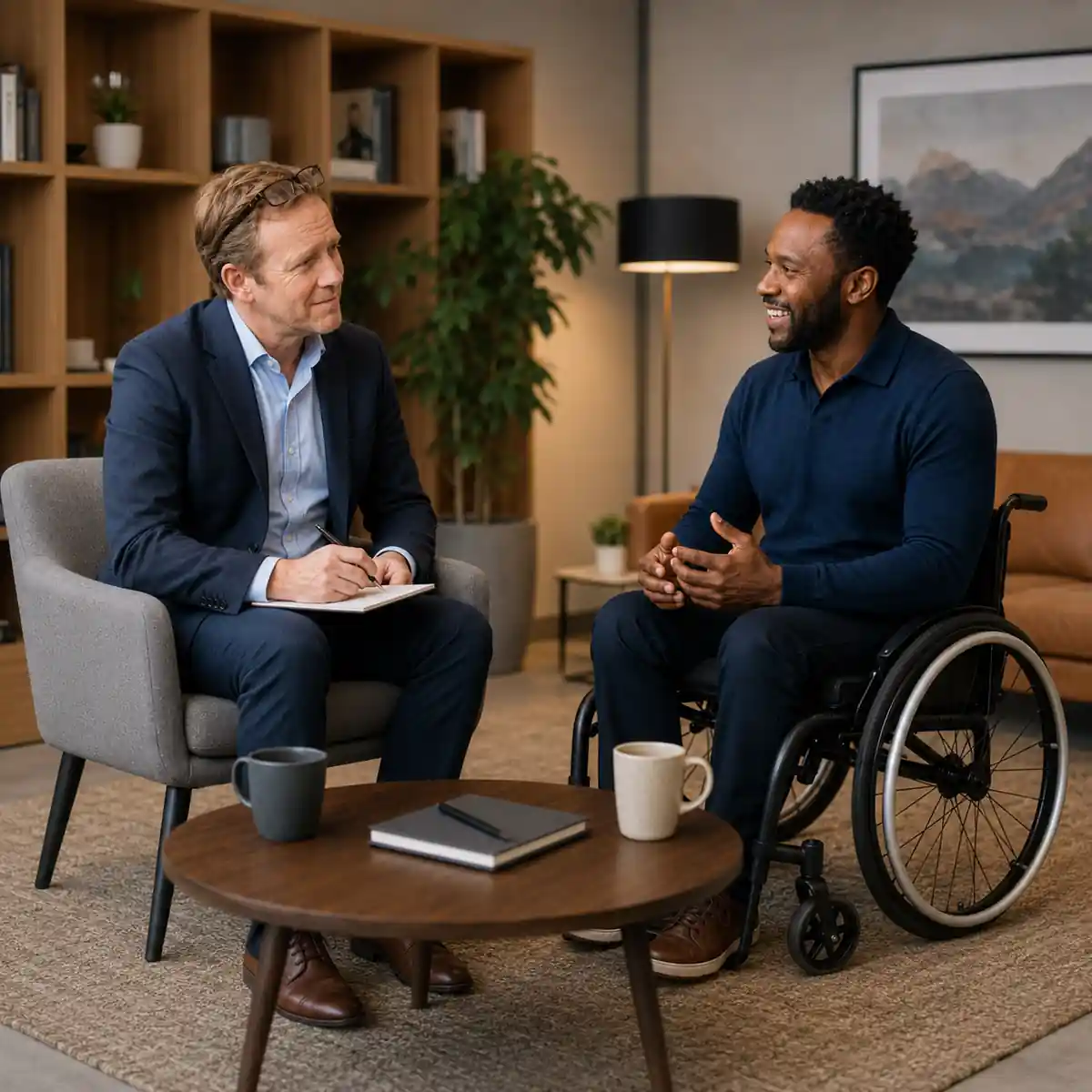
Recruitment manager reviewing candidates

Practical action

The aim is to make recruitment clearer, fairer and easier to act on.

What you receive

Depending on the scope of work, support may include:

review of job adverts and role descriptions
review of application forms and candidate communication
recommendations for accessible interview and assessment design
reasonable adjustment guidance for recruitment teams
inclusive recruitment training for hiring managers
advice on candidate disclosure and adjustment requests
onboarding and new starter support recommendations
a practical action plan for improving the recruitment journey

The aim is not to create complexity. It is to help your organisation make recruitment clearer, fairer and easier to act on.

Other resources

Inclusive recruitment works best when it connects with wider workplace inclusion, adjustments and employee support.

Build a fairer recruitment process

If you want to make recruitment more accessible for disabled and neurodivergent candidates, Calling All Minds can help you identify barriers and build practical improvements.

Contact Calling All Minds

Frequently Asked Questions

Clear answers about inclusive recruitment, accessible hiring, reasonable adjustments and onboarding.

Inclusive recruitment means designing hiring processes that are fair, accessible and welcoming for people with different access needs, communication styles, backgrounds and ways of working. It helps employers remove unnecessary barriers so candidates can show their skills and potential.

Disabled and neurodivergent candidates can be disadvantaged by unclear job adverts, inaccessible application forms, rigid interviews, timed assessments, poor communication or unclear reasonable adjustment processes. Inclusive recruitment helps reduce those barriers.

Yes. We can advise on practical reasonable adjustments such as interview questions in advance, additional preparation time, alternative assessment formats, accessible locations, online interviews, breaks, written responses and communication preferences.

Yes. We can review job adverts, person specifications and role descriptions for inclusive language, unnecessary criteria, unclear expectations and barriers that may discourage disabled or neurodivergent applicants.

Yes. We can review application forms, candidate portals and recruitment journeys for accessibility, clarity, cognitive load and ease of use. This can include reviewing instructions, error messages, document upload requirements and support information.

Yes. We can support hiring managers with training and guidance on disability inclusion, neurodiversity, reasonable adjustments, interview practice, fair assessment and accessible candidate communication.

No. Disability and neurodiversity are central to our work, but our approach is also shaped by intersectionality. Candidates may experience barriers differently depending on race, gender, class, age, caring responsibilities, language, sexuality, mental health or previous experiences of exclusion.

Yes. Inclusive recruitment creates a stronger foundation for onboarding, reasonable adjustments and long-term employee support. When candidates can ask for support early and clearly, employers are better placed to help them succeed.

The recruitment process should connect smoothly into onboarding. If a candidate has requested adjustments during hiring, there should be a clear and respectful route for discussing support once they join, without requiring them to start again.

Start by reviewing the candidate journey from job advert to onboarding. Calling All Minds can help identify barriers, recommend practical improvements and support your team with inclusive recruitment guidance or training.