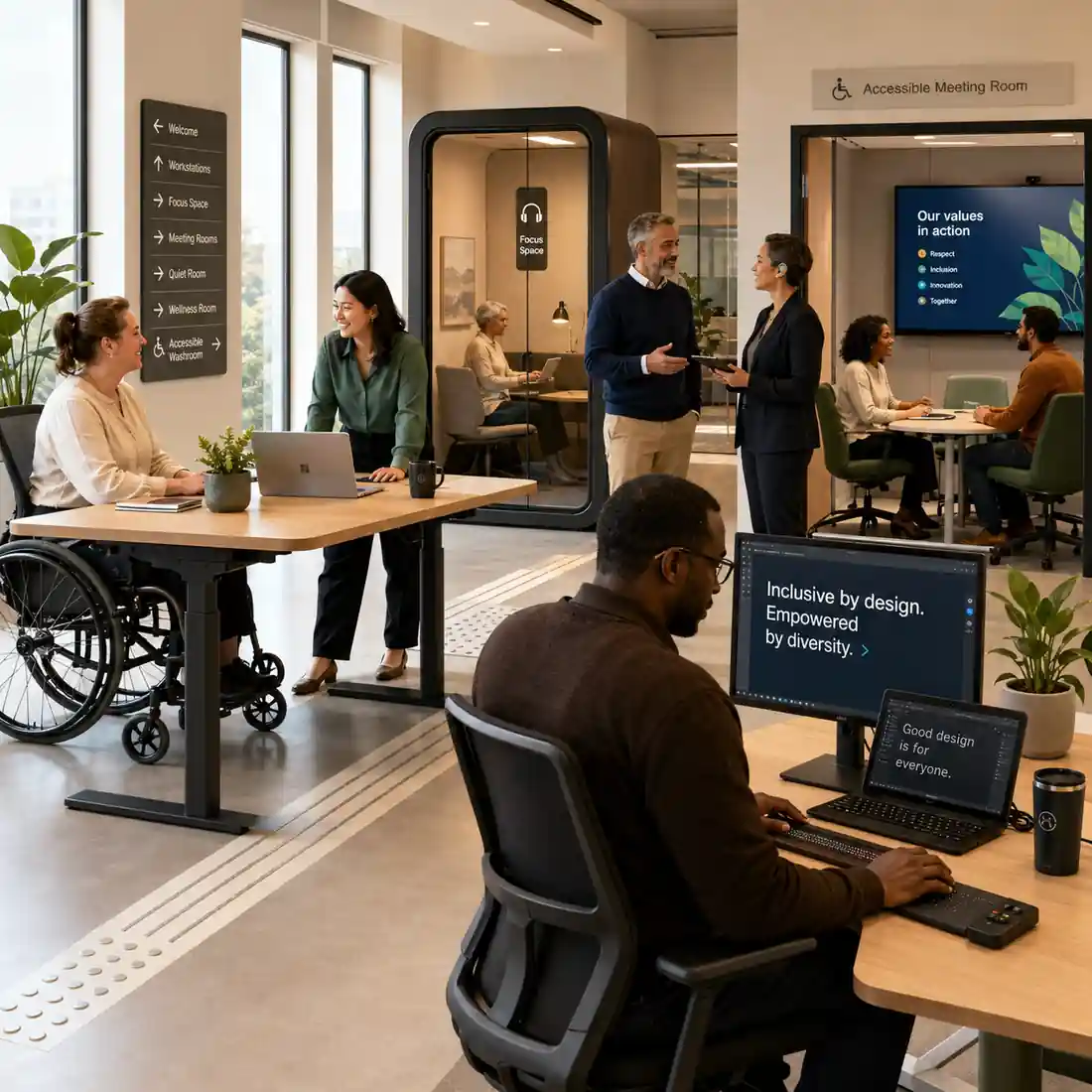
Physical, sensory, digital and organisational access

Workplace Environment Audits

Helping organisations understand where workplace environments create barriers.

A workplace can meet basic requirements and still be difficult for people to work in.

Calling All Minds provides Workplace Environment Audits for employers who want to understand how their physical, sensory, digital and organisational environments affect disabled and neurodivergent employees.

We look beyond individual needs alone. We examine the spaces, systems, tools, communication patterns and working expectations that shape whether people can focus, collaborate, access information and work sustainably.

The aim is simple: to help organisations identify barriers, prioritise improvements and create workplaces where more people can contribute fully.

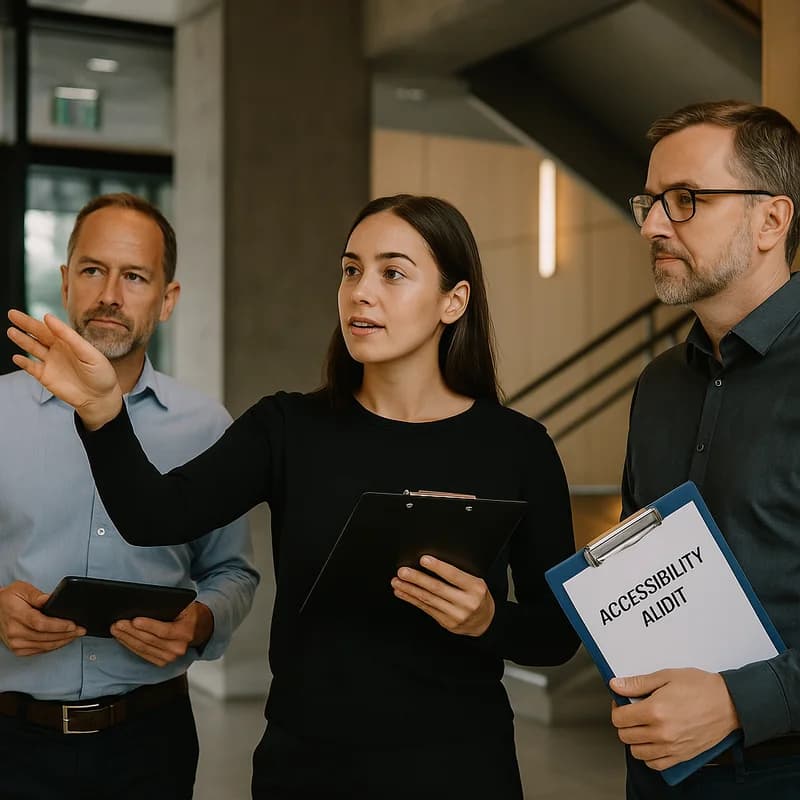
Workplace environment auditor observing an office

Why workplace environments matter

Inclusion is not only about individual adjustments. Sometimes the barrier is the environment itself.

A noisy open-plan office may make focus difficult. Poor lighting may increase fatigue. A meeting-heavy culture may disadvantage people who process information differently. Digital tools may be inaccessible or overwhelming. Hybrid working may support some people but create confusion for others.

When these barriers are not understood, organisations can end up treating every challenge as an individual problem. That leads to repeated adjustments, inconsistent support and employees having to explain the same barriers again and again.

A Workplace Environment Audit helps employers see the bigger picture.

It can identify patterns across the organisation and show where changes to the environment, communication, systems or culture may reduce the need for repeated individual workarounds.

What we review

We can review one workplace, several locations, hybrid practices or specific journeys through the working environment.

Physical environment

We review the practical accessibility of the workplace, including layout, access routes, desks, meeting rooms, shared spaces, quiet areas, signage, seating and movement through the building.

This can help identify barriers that affect mobility, comfort, fatigue, privacy, concentration and access to facilities.

Sensory environment

We consider sensory factors such as noise, lighting, visual distraction, temperature, smells, interruptions, crowding and the availability of quieter spaces.

This is especially important for autistic employees, people with ADHD, sensory processing differences, anxiety, migraine, fatigue or other access needs.

Digital environment

We look at the workplace tools, systems and platforms employees are expected to use. This may include intranets, HR systems, communication platforms, booking tools, document systems, forms and digital workflows.

Digital barriers can affect reading, navigation, memory, focus, comprehension, task completion and confidence.

Communication and meeting culture

We review how information moves through the organisation, including meetings, instructions, feedback, written communication, informal norms and expectations around responsiveness.

Communication barriers can particularly affect neurodivergent employees, employees with anxiety, hearing-related access needs, processing differences or fatigue.

Work patterns and routines

We consider how working hours, breaks, hybrid working, task switching, deadlines, workload rhythms and role expectations affect accessibility and sustainability.

This can help employers understand where working patterns may be creating unnecessary pressure or avoidable barriers.

Adjustment pathways

We look at whether employees know how to ask for support, whether managers know how to respond and whether reasonable adjustment processes are clear, consistent and properly documented.

This links workplace design with real operational inclusion.

Our approach

Calling All Minds’ approach to Workplace Environment Audits is grounded in the Bio-Social Model of disability inclusion, intersectionality, Universal Design and anticipatory welcome.

This means we do not view accessibility as a list of individual problems to be fixed one person at a time. We consider the relationship between people, environments and systems.

Universal Design and anticipatory welcome ask a better question: How can this environment be designed so more people can access it without having to fight for support first?

What the audit can help identify

A Workplace Environment Audit can help identify issues such as:

  • sensory overload in shared spaces
  • inaccessible meeting rooms or routes
  • unclear signage or wayfinding
  • barriers in hybrid working practices
  • inaccessible workplace software or digital systems
  • unclear reasonable adjustment processes
  • inconsistent manager responses
  • communication patterns that increase cognitive load
  • lack of quiet or low-stimulation spaces
  • poor support for focus, privacy or recovery
  • unclear expectations around meetings, deadlines or responsiveness
  • repeated barriers affecting more than one employee group

The audit is not about blame. It is about clarity.

Once an organisation understands the barriers, it can begin to prioritise change.

Inclusive workplace setting

Clear action route

The aim is to create a clear action route, not an unrealistic wish list.

What you receive

After the audit, we provide practical recommendations designed for employers, HR teams, workplace leaders, facilities teams, inclusion teams and managers.

Depending on the scope, recommendations may include:

physical environment improvements
sensory accessibility recommendations
digital accessibility or usability actions
communication and meeting guidance
reasonable adjustment process improvements
manager guidance and training needs
signposting to workplace needs assessments
assistive technology recommendations
inclusive hybrid working considerations
short, medium and longer-term priorities

The aim is to create a clear action route, not an unrealistic wish list.

Workplace Environment Audits and reasonable adjustments

A Workplace Environment Audit does not replace individual reasonable adjustments. Some employees will still need personalised support through a Workplace Needs Assessment, Access to Work, coaching, assistive technology or manager guidance.

But environmental audits can help organisations reduce the number of barriers that employees have to raise individually.

If several employees are struggling with the same meeting culture, the answer may not be several separate adjustments. It may be better meeting design.

If repeated requests involve quiet space, lighting, focus time or communication preferences, the organisation may need to review the workplace environment itself.

This is where environment audits are powerful. They help employers move from reactive adjustments to more inclusive design.

From repeated adjustments to inclusive design

If repeated requests involve quiet space, lighting, focus time or communication preferences, the organisation may need to review the workplace environment itself.

Environmental audits help organisations understand shared patterns, not only individual cases.

How we work with organisations

We help your organisation understand what to change, why it matters and how to prioritise action.

1

Understand the context

We begin by understanding your workplace, workforce, concerns and goals. This may include reviewing existing policies, previous feedback, adjustment themes or known access issues.

2

Review the environment

We examine the relevant physical, sensory, digital and organisational factors. The scope may focus on one site, several locations, hybrid working practices or specific workplace journeys.

3

Identify barriers

We identify where the environment may create barriers for disabled, neurodivergent or cognitively diverse employees.

4

Recommend practical improvements

We provide clear recommendations that help your organisation understand what to change, why it matters and how to prioritise action.

Other resources

Workplace Environment Audits often connect with wider workplace support, digital accessibility and adjustment systems.

Create a clearer route to accessible workplace design

Calling All Minds can help your organisation identify environmental barriers, prioritise improvements and create workplaces where more people can contribute fully.

Contact Calling All Minds