

On 21 May 2026, the House of Commons Work and Pensions Committee called for employers to have a two-week legal deadline to respond to disabled workers’ reasonable adjustment requests. It also recommended that refusals should be explained in writing.
This is not yet law. But employers should not wait for legislation before taking it seriously.
The direction of travel is clear: reasonable adjustments are moving from informal conversations and variable manager confidence towards response standards, written decisions and accountability.
For HR teams, managers and leaders, the question is no longer simply whether the organisation supports reasonable adjustments in principle.
The sharper question is this:
> Can the organisation show that adjustment requests are handled quickly, consistently and transparently?
The problem is not awareness. It is delay.
Most employers understand that disabled employees may need reasonable adjustments. Many also understand that the duty sits under the Equality Act 2010.
The harder question is what happens after someone asks.
Requests can sit unanswered. Managers may be unsure what they can approve. HR teams may lack clear records. Employees may be asked to repeat personal information more than once. Decisions may be delayed, undocumented or never properly explained.
The Work and Pensions Committee’s Disability at Work report describes too many workplaces as hostile environments for disabled people. It identifies two major barriers: employer reluctance to make reasonable adjustments and workplaces that are inaccessible by default.
The evidence is stark. The Committee reported that 82% of disabled people who requested an adjustment had to wait between four months and over a year for it to be implemented. It also highlighted evidence that 11% of requests in local government received no response at all.
A two-week response deadline would not solve every problem. It would not guarantee implementation. It would not make every workplace accessible overnight.
But it would force an important discipline: employers would have to respond.
This is a retention issue, not just a legal issue
The disability employment gap remains one of the clearest signs that the labour market is still not working for disabled people.
The Committee reported that the employment rate for disabled people was 52.8%, compared with 82.5% for non-disabled people. It also stated that disabled people leave work at more than twice the rate of non-disabled people: 10.1% a year compared with 4.6%.
Those figures should matter to every employer.
If an employee waits months for an adjustment, the delay has consequences. It can mean avoidable stress, reduced performance, sickness absence, damaged confidence or a decision to leave work altogether.
The cost is not only legal risk. It is lost talent, lost trust and lost productivity.
Access to Work cannot carry the whole process
Access to Work remains an important source of support. For many disabled workers, it can help fund equipment, support workers or other workplace help.
But employers cannot outsource their entire adjustment process to a government scheme.
The National Audit Office reported that the average time to process an Access to Work application was 52 working days in 2024-25, rising to 83 working days where a workplace assessment was involved. It also reported that the backlog increased from 22,598 applications in March 2024 to 36,721 in March 2025.
The practical point is simple.
If an employee needs support now, the employer still needs an internal route for recording the request, making a decision, taking interim action where possible and tracking what happens next.
Access to Work can be part of the answer. It cannot be the whole system.
Passports help, but only when the system behind them works
Reasonable adjustment passports are an important part of the conversation. They can help employees record access needs and avoid having to re-explain their disability each time they change role, manager or team.
That matters. Repetition is not neutral. For many disabled and neurodivergent employees, repeatedly explaining access needs can be exhausting, exposing and demoralising.
But a passport is not a magic document.
Business Disability Forum has warned that passports can be ineffective when used in isolation, particularly if employers treat them as a shortcut instead of reviewing the full workplace adjustment process.
That warning is important.
A form is not a process. A record is not implementation. A passport is valuable only when the organisation around it knows how to respond.
Informal processes are no longer enough
Many organisations still rely on informal conversations to manage reasonable adjustments.
Sometimes that works. A confident manager, a straightforward request and a trusted relationship can produce a quick solution.
But informal processes fail when the request is complex, the manager is unsure, the employee is anxious about disclosure or the organisation has no consistent way to record and follow up.
The result is predictable. Requests are missed. Employees do not know what happens next. Managers lack guidance. Decisions are not recorded. Refusals are not explained. Adjustments are lost when roles or managers change.
This creates risk for employers. More importantly, it creates uncertainty for employees.
For many disabled and neurodivergent people, uncertainty itself becomes a barrier. Not knowing whether support will be agreed, when it will happen or whether it will survive a manager change can make work feel unsafe.
Employers need adjustment infrastructure
The Committee’s recommendation should change the way employers think about reasonable adjustments.
This is not only a training issue. It is not only a legal issue. It is not only a manager confidence issue.
It is an infrastructure issue.
Employers need a clear route for requests, structured employee input, manager guidance, HR visibility, written decisions, response tracking, implementation records and review points.
Without that infrastructure, inclusion depends too heavily on memory, goodwill and individual confidence.
That is not enough.
Assistive technology and accessible workplaces matter too
The Committee also highlighted inaccessible workplaces as a major barrier. It noted that inaccessible technology is an increasing problem and that employers need to be more proactive in offering assistive technology.
That matters because reasonable adjustments should not be treated only as individual exceptions.
Sometimes the right response is an individual adjustment. Sometimes it is assistive technology training. Sometimes it is a change to communication, workload, software, meeting practice or flexibility. Sometimes the deeper issue is that the workplace was not accessible enough in the first place.
A mature adjustment process should help employers see both the individual request and the wider pattern.
If ten people need the same workaround, the problem may not be ten individual employees. It may be the system.
What employers should do now
Employers do not need to wait for the Government to respond.
They can start by setting an internal response standard. Two weeks is a sensible benchmark to prepare for.
They should record every request, give managers a clear route for decisions, explain refusals in writing and track implementation, not just approval.
An adjustment that is agreed but not implemented is not meaningful support.
Where AXS Passport fits
This is the problem AXS Passport is designed to help solve.
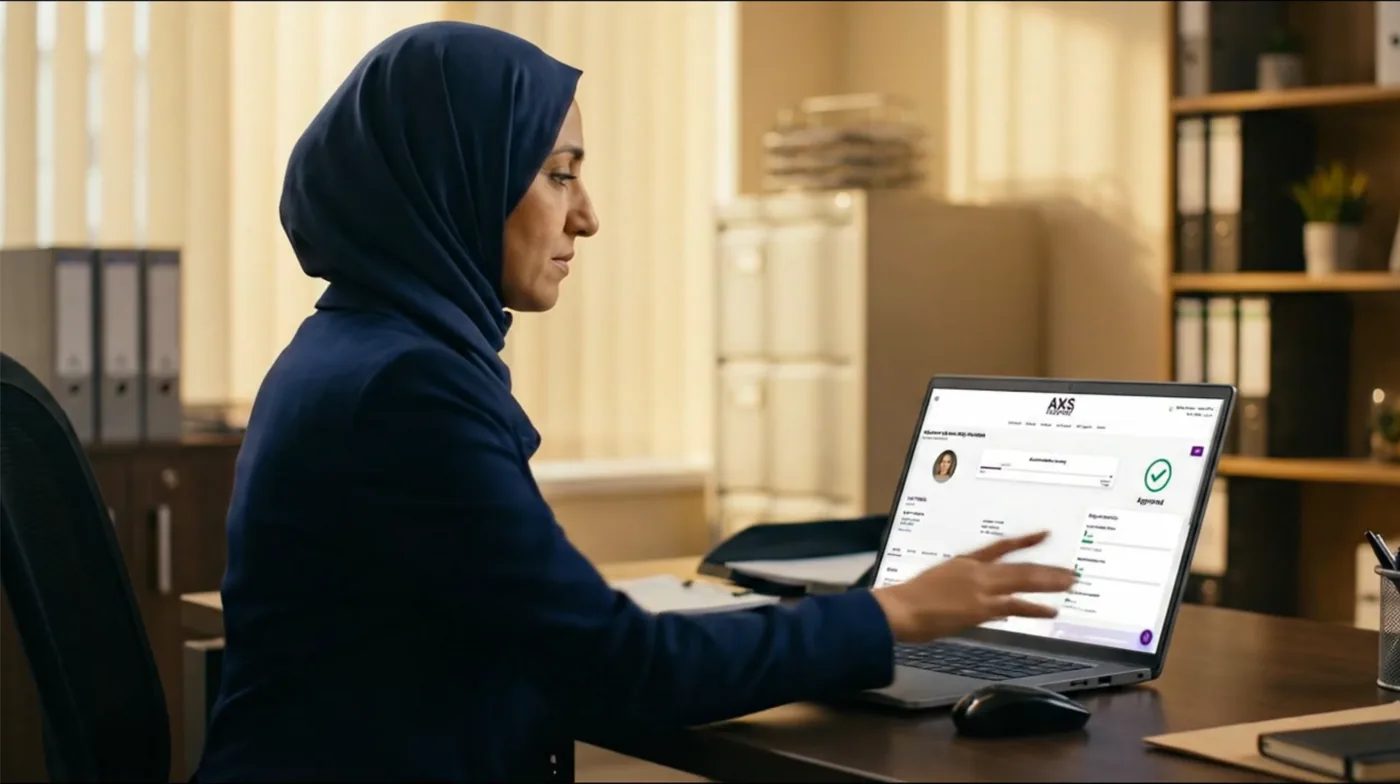
AXS Passport gives employees a structured way to communicate access needs, support preferences and workplace adjustment requests. It helps employers move away from scattered conversations, lost documents and unclear ownership.
Used well, a digital accessibility passport can support clearer adjustment requests, better employee voice, structured manager review, written decisions, response tracking, implementation visibility and continuity when roles or managers change.
The point is not to replace good management. It is to make good management easier.
The point is not to remove human judgement. It is to give that judgement structure, evidence and accountability.
AXS Passport is built for a world where reasonable adjustments need to be handled with more speed, clarity and care.
Learn more about AXS Passport.
Inclusion needs infrastructure
The Work and Pensions Committee’s recommendation should not be read as a narrow legal proposal. It should be read as a warning light.
The current way many organisations handle reasonable adjustments is too slow, too informal and too dependent on individual manager confidence.
Disabled and neurodivergent employees need timely support. Managers need clearer guidance. HR teams need visibility. Employers need defensible processes. Leadership teams need data they can act on.
Reasonable adjustments should not depend on who someone asks, how confident their manager feels or whether a conversation is remembered.
The future of workplace inclusion will belong to organisations that can show not only that they care, but that their systems work.
Two weeks may become the deadline.
But the real challenge is bigger.
Employers need to build adjustment processes that are clear, human and accountable before the law forces them to.