
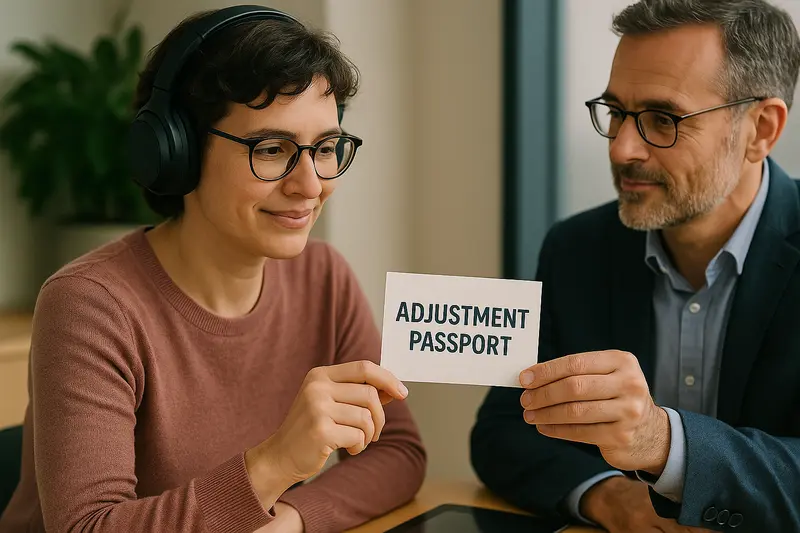

Adjustment passports have emerged as popular tools for documenting and transferring workplace accommodations, promising to streamline support processes while reducing the burden on employees to repeatedly explain their needs. However, the reality of passport implementation often falls short of these aspirations.
When designed and implemented thoughtfully, adjustment passports can serve as valuable communication tools that enhance workplace inclusion. However, poorly conceived passports can create new barriers while failing to address the fundamental challenges they were designed to solve.
Understanding both the potential benefits and inherent limitations of adjustment passports enables organizations to make informed decisions about their implementation and design.
The Promise and Reality of Adjustment Passports
Theoretical Benefits
Adjustment passports theoretically offer several advantages: reduced need for repeated disclosure, consistent accommodation implementation across teams and roles, and simplified onboarding processes for new managers. They promise to create portable records that follow employees throughout their careers.
For employees, passports could eliminate the exhausting process of repeatedly explaining their needs to new managers, colleagues, and HR representatives. For organizations, they offer standardized approaches to accommodation management and documentation.
Implementation Challenges
Despite their theoretical appeal, adjustment passports face significant practical obstacles. Many employees remain reluctant to document their needs formally, particularly when passports become permanent records that could affect future opportunities or career progression.
The static nature of most passports fails to account for fluctuating conditions, changing roles, or evolving accommodation needs. What works in one context may be inappropriate or insufficient in another.
Critical Design Considerations
Employee Control and Ownership
Effective adjustment passports must prioritize employee control over their content, distribution, and usage. Employees should determine who has access to their passport information and how that information is used within the organization.
Mandatory passport systems that require disclosure or documentation often create more barriers than they remove, particularly for employees who prefer informal accommodation arrangements or who haven't disclosed their disabilities.
Flexibility and Adaptability
Successful passports accommodate changing needs and circumstances rather than locking employees into fixed accommodation arrangements. They should serve as starting points for accommodation conversations rather than definitive prescriptions.
Include mechanisms for regular review and updating, recognizing that effective accommodations may change based on role requirements, health fluctuations, or personal preferences.
Building Trust Through Transparent Processes
Clear Data Governance
Establish explicit policies about how passport information is stored, who can access it, and how it's used in employment decisions. Employees need confidence that their accommodation information won't be used against them in performance evaluations, promotion decisions, or restructuring processes.
Implement robust data protection measures and provide clear communication about information handling practices.
Voluntary Participation
Make passport participation genuinely voluntary rather than creating subtle pressure for employees to document their needs. Some individuals prefer informal accommodation arrangements or case-by-case discussions rather than formal documentation.
Ensure that employees who choose not to use passports have equal access to accommodation support through alternative processes.
Effective Passport Content and Structure
Focus on Solutions Rather Than Diagnoses
Effective passports emphasize practical accommodation solutions rather than medical diagnoses or detailed disability descriptions. Focus on what works rather than why it's needed.
For example, rather than documenting "ADHD requiring noise reduction," a passport might note "works most effectively in quiet environments with minimal auditory distractions."
Include Context and Rationale
Provide sufficient context to help managers understand how to implement accommodations effectively while respecting employee privacy. Include information about when accommodations are most important and how their effectiveness can be assessed.
Regular Review Mechanisms
Build in structured opportunities for employees to review and update their passports, ensuring that documented accommodations remain relevant and effective.
Manager Training and Support
Understanding Passport Limitations
Train managers to view passports as starting points for accommodation conversations rather than comprehensive solutions. Emphasize the importance of ongoing dialogue about accommodation effectiveness and changing needs.
Help managers understand that passport accommodations may need modification based on specific role requirements or team dynamics.
Accommodation Implementation Skills
Provide practical training on how to implement common accommodations effectively, including how to assess their success and make adjustments when needed.
Include guidance on having supportive conversations about accommodation needs and creating psychologically safe environments for these discussions.
Alternative Approaches to Consider
Informal Accommodation Cultures
Some organizations achieve better inclusion outcomes through informal accommodation cultures that normalize flexibility and adaptation without requiring formal documentation.
These approaches emphasize manager training, cultural change, and proactive accommodation practices rather than individual documentation systems.
Hybrid Models
Consider hybrid approaches that combine formal passport options with informal accommodation processes, allowing employees to choose the level of documentation that works best for their circumstances.
Measuring Passport Effectiveness
Employee Satisfaction and Utilization
Track both passport adoption rates and employee satisfaction with the process. Low utilization may indicate design problems or implementation barriers rather than lack of need.
Accommodation Outcomes
Assess whether passport users receive more effective accommodations compared to employees using alternative processes. Effective passports should improve accommodation quality and consistency.
Manager Confidence and Competence
Evaluate whether managers feel more confident and competent in providing accommodations when working with passport users versus other employees.
Making Informed Implementation Decisions
Organizational Readiness Assessment
Before implementing adjustment passports, assess organizational culture, manager capabilities, and existing accommodation processes. Passports work best in organizations with strong inclusion cultures and well-trained managers.
Pilot Programs and Iteration
Consider pilot programs that allow for testing and refinement before organization-wide implementation. Gather feedback from both employees and managers to identify design improvements.
Success Metrics and Evaluation
Establish clear metrics for passport success that go beyond simple adoption rates to include accommodation effectiveness, employee satisfaction, and inclusion outcomes.
The Future of Workplace Accommodation
Adjustment passports represent one approach to improving workplace accommodation processes, but they're not universal solutions. The most effective organizations focus on creating cultures where accommodation conversations are normalized and managers are equipped to provide flexible support.
Whether through formal passports or alternative approaches, the goal remains the same: ensuring that all employees have access to the support they need to perform their best work while feeling valued and included.
Ready to improve your accommodation processes? Consider your organizational culture, employee preferences, and manager capabilities when deciding whether adjustment passports align with your inclusion goals and values. For a dedicated digital passport system, visit AXS Passport. If employees or managers need individual support alongside adjustment systems, explore our neurodiversity coaching for workplaces.